




Explore Melbourne With Northcote Tours Co.
Melbourne doesn’t hand itself over easily. It’s not a city of one or two headline landmarks that you tick off and leave — it’s a city of layers, laneways, neighbourhoods, and subcultures that reveal themselves the more time you spend and the deeper you look. The street art in Hosier Lane is the famous starting point, but the laneways that actually matter to Melburnians are the ones you’d walk past without knowing they were there. The coffee is world-class, but the cafes that define the culture aren’t the ones in the guidebooks. The food spans every cuisine on the planet, but the best of it is scattered across suburbs that most visitors never reach.
That’s where a good tour makes the difference. Melbourne rewards curiosity and local knowledge in equal measure, and a guided experience — whether it’s a walking tour through the CBD’s hidden arcades, a food crawl through the inner north, a street art deep dive, or a day trip along the Great Ocean Road — gives you the city as Melburnians actually experience it rather than the surface-level version designed for people passing through.
A City of Neighbourhoods
Melbourne’s identity lives in its suburbs as much as its centre. The CBD and Southbank are where most visitors start, and the laneways, arcades, rooftop bars, and cultural institutions there are genuinely worth exploring. But Melbourne’s soul is distributed — Fitzroy’s pub-and-gallery scene, Carlton’s Italian heritage, South Melbourne’s market culture, St Kilda’s beachfront character, Richmond’s Vietnamese food strip on Victoria Street, Brunswick’s live music rooms, Collingwood’s warehouse conversions, and the Yarra Valley wine region on the city’s eastern fringe.
The best Melbourne tours treat the city this way — as a collection of distinct villages rather than a single destination. A food tour through Footscray’s multicultural markets is a completely different Melbourne from a wine tour through the Yarra Valley or a twilight walk through the CBD’s rooftop bars. The variety is the point, and it’s what makes Melbourne one of the most rewarding cities in Australia for visitors willing to go beyond the obvious.
What You’ll Find Here
We bring together the best tours and experiences across Melbourne, from half-day walking tours of the inner city to full-day trips along the coast and into the wine regions. Every listing is selected for quality, local knowledge, and the kind of experience that shows you something you wouldn’t find on your own.
City tours and walking tours cover the CBD laneways, street art hotspots, architectural highlights, and hidden arcades that define Melbourne’s urban character. These are the best starting point — your guide gives you the map, the stories, and the recommendations that frame everything else you do during your stay.
Food and coffee tours are essential Melbourne. The city’s food culture is arguably its strongest claim to global relevance — a multicultural kitchen that spans Vietnamese, Greek, Italian, Ethiopian, Chinese, Lebanese, Indian, and Japanese cuisines alongside a homegrown cafe and dining scene that punches well above its weight. A guided food tour takes you to the places that locals actually eat, not the places that tourists queue for.
Street art tours go beyond Hosier Lane into the wider network of laneways, walls, and commissioned murals that make Melbourne one of the world’s great street art cities. A guide who knows the scene can tell you who painted what, why it matters, and where the newest work is — the art changes constantly, and a good guide keeps up.
Day trips extend your Melbourne experience into the surrounding landscape. The Great Ocean Road (the Twelve Apostles, the surf coast, rainforest walks), the Yarra Valley (cool-climate wines, cellar doors, the Healesville Sanctuary), Phillip Island (the penguin parade, coastal scenery), and the Dandenong Ranges (mountain ash forests, Puffing Billy railway, small-town charm) are all within day-trip range and each delivers a dramatically different character from the city itself.
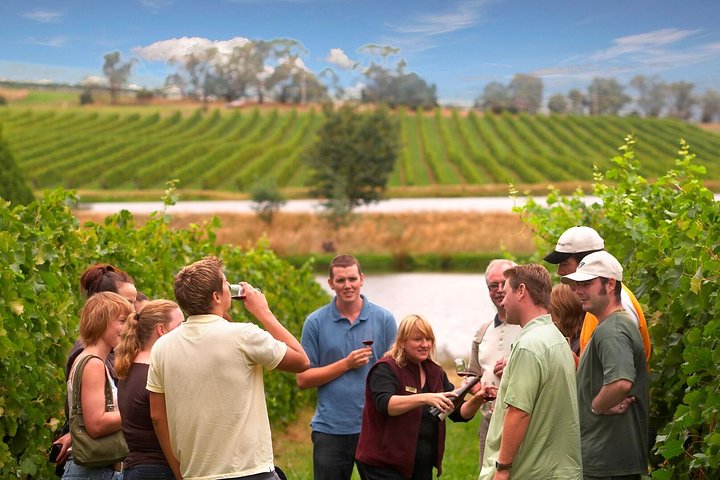
Wine tours focus on the Yarra Valley and Mornington Peninsula — two of Victoria’s premier wine regions, both within an hour of the CBD. The Yarra Valley is known for its Pinot Noir, Chardonnay, and sparkling wine; the Mornington Peninsula adds coastal scenery and a more relaxed, beachy atmosphere to its cellar doors. Both regions are best explored with a guide who handles the driving and knows which producers to visit.
Wildlife and nature tours take advantage of Melbourne’s proximity to remarkable natural environments — Phillip Island’s penguin colony, the koalas and kangaroos of the Grampians and Great Otway National Park, the marine life of Port Phillip Bay, and the birdlife of the Western Treatment Plant wetlands. Australia’s wildlife is a major draw, and Melbourne is one of the best bases in the country for accessing it without flying to a remote destination.
Planning Your Melbourne Visit
Melbourne’s weather is famously unpredictable — four seasons in one day is a local cliche because it’s often literally true. This works in your favour when planning tours. Indoor-focused experiences (food tours, coffee tours, market tours, gallery walks) are excellent wet-weather options, while day trips to the Great Ocean Road, Yarra Valley, and Phillip Island are best saved for days with clearer forecasts.
Autumn (March–May) is arguably Melbourne’s best season — mild temperatures, autumn colour in the Yarra Valley and Dandenong Ranges, and fewer crowds than the summer peak. The Melbourne Food and Wine Festival in March adds a burst of culinary programming.
Winter (June–August) is cool and grey but far from bleak. Melbourne’s indoor culture — cafes, restaurants, bars, galleries, theatres — comes into its own, and the Great Ocean Road’s dramatic winter storms make for spectacular coastal scenery. This is the quieter season for tourism, which means smaller tour groups and easier bookings.
Spring (September–November) brings the Melbourne Cup carnival, improving weather, and the gardens and parks at their most colourful. The Yarra Valley and Peninsula wine regions are beautiful as the vines wake up.
Summer (December–February) is warm, long-daylit, and busy — the Australian Open, outdoor festivals, and beach culture on the bay. Day trips to Phillip Island and the Peninsula are at their peak appeal, but book popular tours well ahead as this is the high season.
Browse the tours, find the Melbourne experience that fits your interests, your time, and the way you like to travel.